Here’s a revised intro for your blog post:

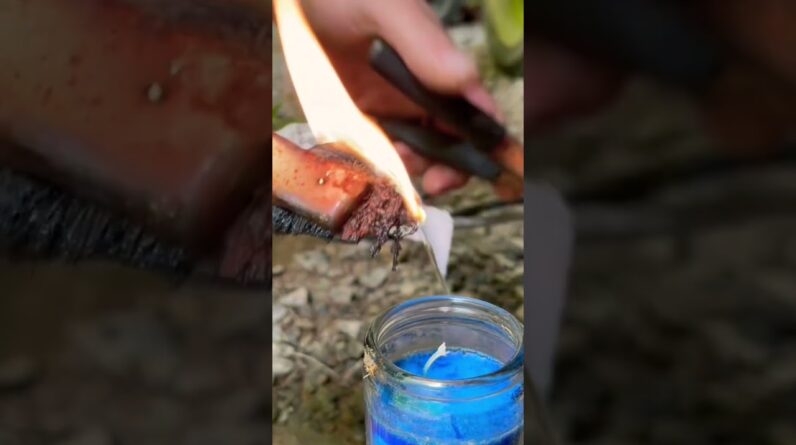
Welcome to our latest adventure – the “We Carry Fire” survival challenge! In this exciting challenge, we’ll be putting our bushcraft and outdoor skills to the test by learning how to start and maintain a signal fire. As you know, a signal fire is a crucial tool for any survival situation, and in this post, we’ll walk you through the steps we took to build our fire, the materials we used, and the techniques we employed. Join us as we explore the art of bushcraft and share our insights on survival skills.
We Carry Fire! #survivalchallenge #bushcraft #signalfire
Introduction
Survival challenges have been around for decades. These challenges present an opportunity for people to learn and apply essential survival skills in the wilderness. The 24-hour survival challenge that involves building a signal fire is one of the most popular survival challenges.
Friends that are looking to test their survival skills are the ones that usually take on such challenges. In a recent survival challenge, the objective was to carry hot coals in a barrel and create smoke for signaling. The team towed the barrel down with a pole as they searched for a suitable location to build a signal fire.
Building a signal fire is considered an essential survival skill. It allows you to attract attention and call for help in emergencies. In this article, we will explore the ropes of the 24-hour survival challenge that involves building a signal fire.
The Challenge
The 24-hour survival challenge that involves building a signal fire is more than just an adventure; it is an opportunity to apply survival skills in a practical scenario. The objective of the challenge is to create visible smoke to attract attention. It doesn’t have to be fancy; the smoke must be visible enough even from a significant distance.
In the recent challenge, the team was given hot coals in a barrel which they towed along with them in search of a suitable location to build their signal fire. After several hours of walking, they finally located a spot that was wide and open enough.
The team started by clearing the area of any dry leaves, twigs, or branches that could easily catch fire. They then dug a shallow pit and built a tripod from three poles. They laid smaller twigs and branches atop the tripod, forming a conical structure.
The coals from the barrel were then placed at the center of the tripod, and the team began to fan it with their shirts to ignite the twigs. After a while, the twigs caught fire, and the team added larger sticks and logs to build the fire higher.
Building the Signal Fire
Building the signal fire required several steps that were essential in creating a visible column of smoke. These steps include:
-
Selecting a suitable spot – the spot must be wide and open enough, away from any trees, dry leaves, or twigs that could easily catch fire.
-
Clearing the area – dry leaves, twigs, and branches should be cleared from the area to prevent the fire from spreading.
-
Building a tripod – a tripod is formed from three poles, laying smaller twigs and branches to form a conical structure. It provides the framework for the fire to be built.
-
Lighting the fire – coals from the barrel were placed at the center of the tripod. The team then fanned it with their shirts to ignite the twigs.
-
Building the fire – larger sticks and logs were added as the fire grew higher to create visible smoke.
Practical Application of Survival Skills
Survival challenges provide an opportunity to apply survival skills in practical scenarios. Building a signal fire is one of the essential survival skills that one needs to learn. It allows you to attract attention in emergency scenarios and call for help.
The recent 24-hour survival challenge that involved building a signal fire required the team to apply several survival skills. They had to carry hot coals in a barrel and search for a suitable spot to build a signal fire. They also had to clear the area, build a tripod, and light the fire while trying to create visible smoke.
We Carry Fire
Building a signal fire is an essential survival skill that everyone should learn. It can save lives in emergency scenarios and provide a beacon of hope in a helpless situation. The recent 24-hour survival challenge that involved carrying hot coals in a barrel and building a signal fire was a test of endurance and survival skills.
The team successfully built a signal fire, and the smoke was visible even from a significant distance. It was a testament to their ability to apply survival skills in a practical scenario, and a reminder that we carry fire within us.
Conclusion
Survival challenges provide an opportunity to learn and apply essential survival skills in practical scenarios. The 24-hour survival challenge that involves building a signal fire is one of the most popular challenges. Building a signal fire is an essential survival skill that everyone should learn. It allows you to attract attention in emergency scenarios and call for help.
In the recent 24-hour survival challenge, the team successfully built a signal fire, and the smoke was visible even from a significant distance. It was a testament to their ability to apply survival skills in a practical scenario and serve as a reminder that we carry fire within us.
FAQs
-
What is the 24-hour survival challenge that involves building a signal fire?
- It is a survival challenge that requires building a signal fire to create visible smoke to attract attention.
-
Why is building a signal fire an essential survival skill?
- Building a signal fire allows you to attract attention in emergency scenarios and call for help.
-
What are the steps involved in building a signal fire?
- Selecting a suitable spot, clearing the area, building a tripod, lighting the fire, and building the fire.
-
What is the objective of the 24-hour survival challenge?
- The objective is to test survival skills in practical scenarios.
-
Who usually takes part in survival challenges?
- Friends that are looking to test their survival skills usually take on these challenges.